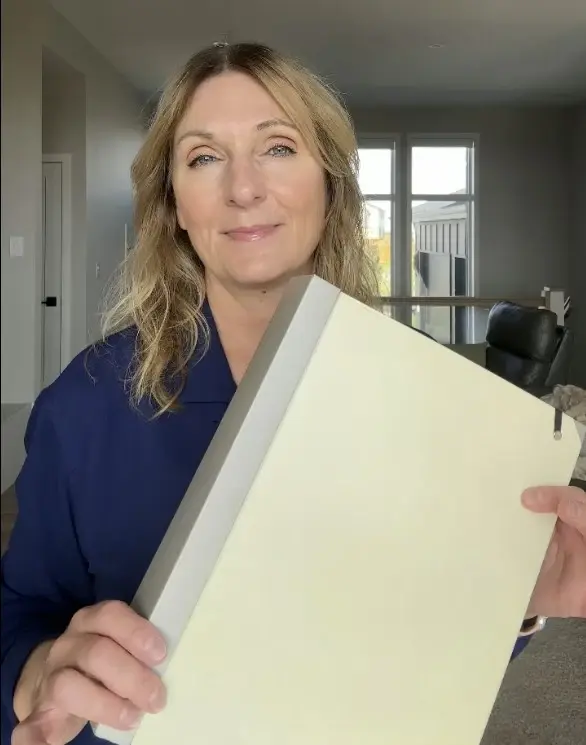
The call came on a Tuesday morning. Barbara Mitchell, 67, was in her kitchen when her phone rang. Her husband of 41 years had collapsed at the golf course. By the time she reached the hospital, the ER team had already been working on him for twenty minutes — and they had questions she couldn't answer.
"They asked me about his medications. I knew he took something for blood pressure, but I didn't know the name or the dose. They asked about allergies. I wasn't sure. They asked about his primary care doctor. I had the name but not the number." She pauses. "I was standing there, and I couldn't help them help him."
Her husband survived. But the experience left Barbara shaken in a way that went beyond the medical scare itself. "I realized I didn't know anything," she says. "After 41 years of marriage, I didn't know where the life insurance policy was. I didn't know our account numbers. I didn't know the password to his email. I didn't know what he wanted if things had gone differently."
"I realized I didn't know anything. After 41 years of marriage, I didn't know where the life insurance policy was."
— Barbara Mitchell, 67, retired teacherBarbara's story is not unusual. It is, in fact, the norm. According to estate planning attorneys and family crisis counselors, the majority of American families are one medical emergency away from exactly this kind of chaos — not because they haven't planned, but because they haven't organized what they've planned.
The Numbers Behind the Crisis
The problem isn't that people don't have documents. Most adults over 50 have wills, insurance policies, bank accounts, and medical records. The problem is that these documents exist in different places — some in filing cabinets, some in email inboxes, some in safe deposit boxes, some in the memories of people who are no longer available to ask.
"We see it constantly," says one estate attorney who asked not to be named. "A spouse dies, and the surviving partner spends months — sometimes years — trying to figure out what existed and where it was. Assets go unclaimed. Insurance policies lapse. Accounts are never found. It's an entirely preventable tragedy."
What 30,000 Families Have Already Done
After her husband's hospitalization, Barbara spent three weeks trying to organize their family's documents. She bought binders. She created spreadsheets. She made lists. None of it worked the way she needed it to.
"Everything I tried was either too complicated or not comprehensive enough," she says. "I needed something that told me exactly what to gather, where to put it, and how to make sure my kids could find it when they needed it."
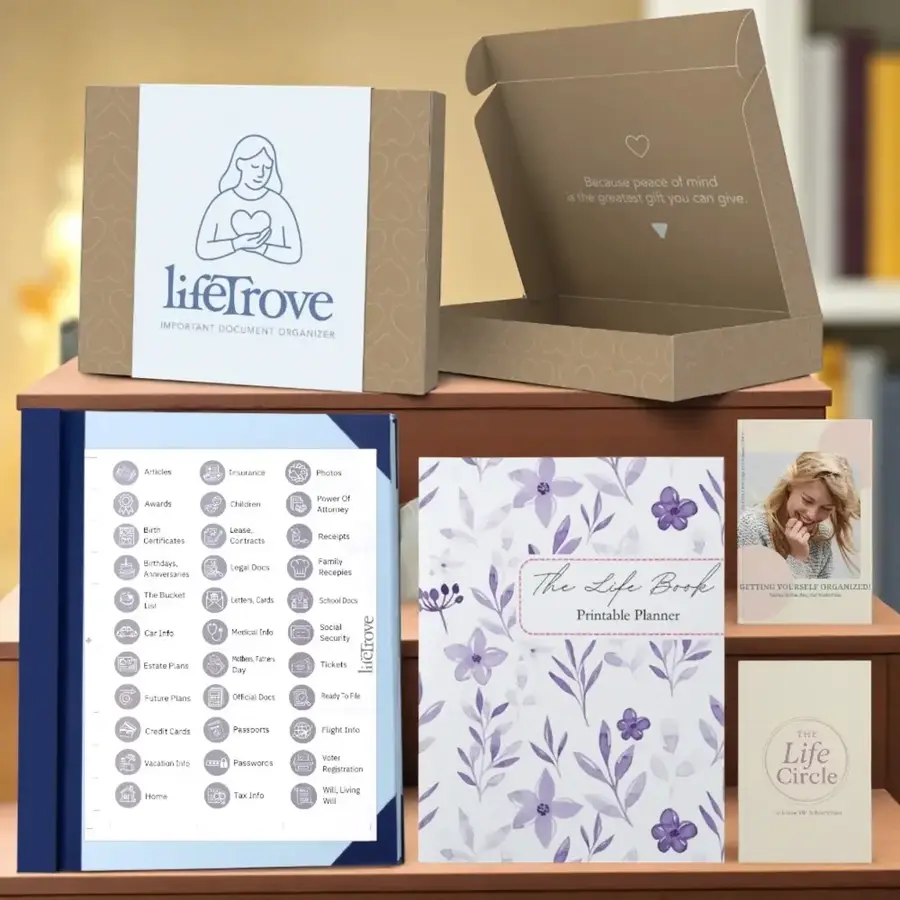
What she eventually found — after considerable searching — was the LifeTrove Document Organizer. It's a physical binder system specifically designed for exactly this problem: gathering every critical document a family might need in a crisis and organizing it in a way that anyone can navigate under pressure.
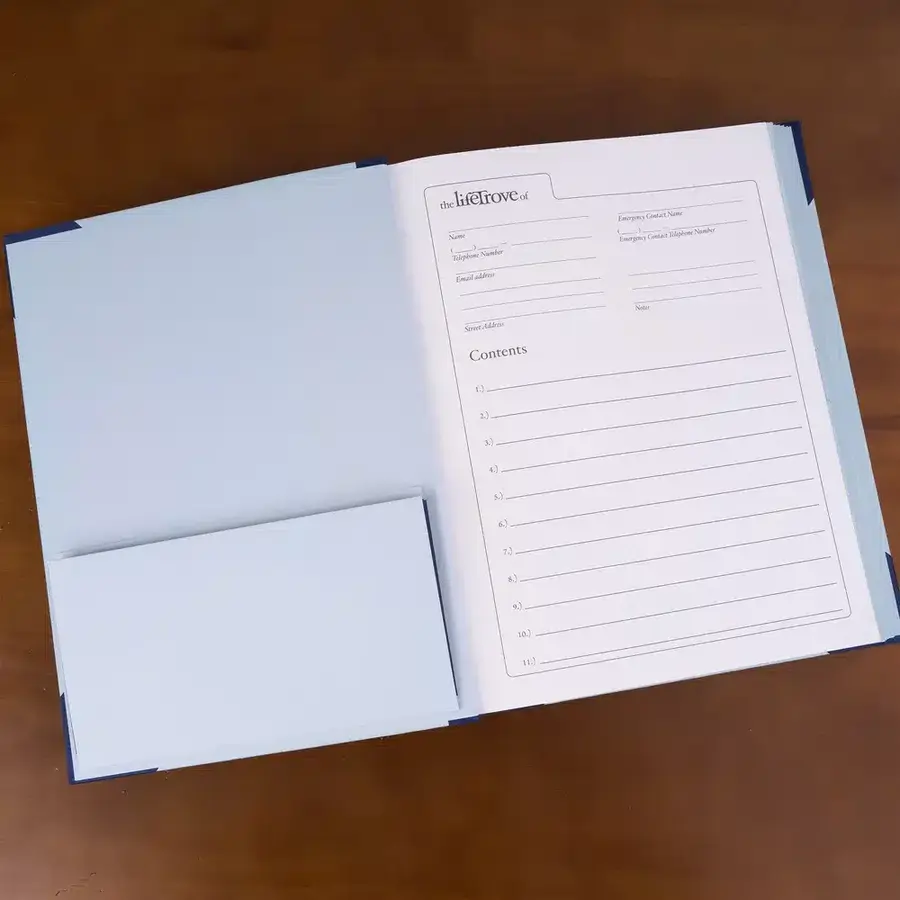
"The first time I sat down with it, I realized how much I was missing," Barbara says. "Not just documents I didn't have — but things I had that I'd never thought to write down. My husband's medication list. Our account numbers. What we wanted for end-of-life care. It took me one Saturday afternoon. One Saturday, and everything was in one place."
What the LifeTrove Organizer Contains
Unlike generic binders or filing systems, the LifeTrove Document Organizer was designed specifically around the documents families need in a crisis — and the order in which they need them.

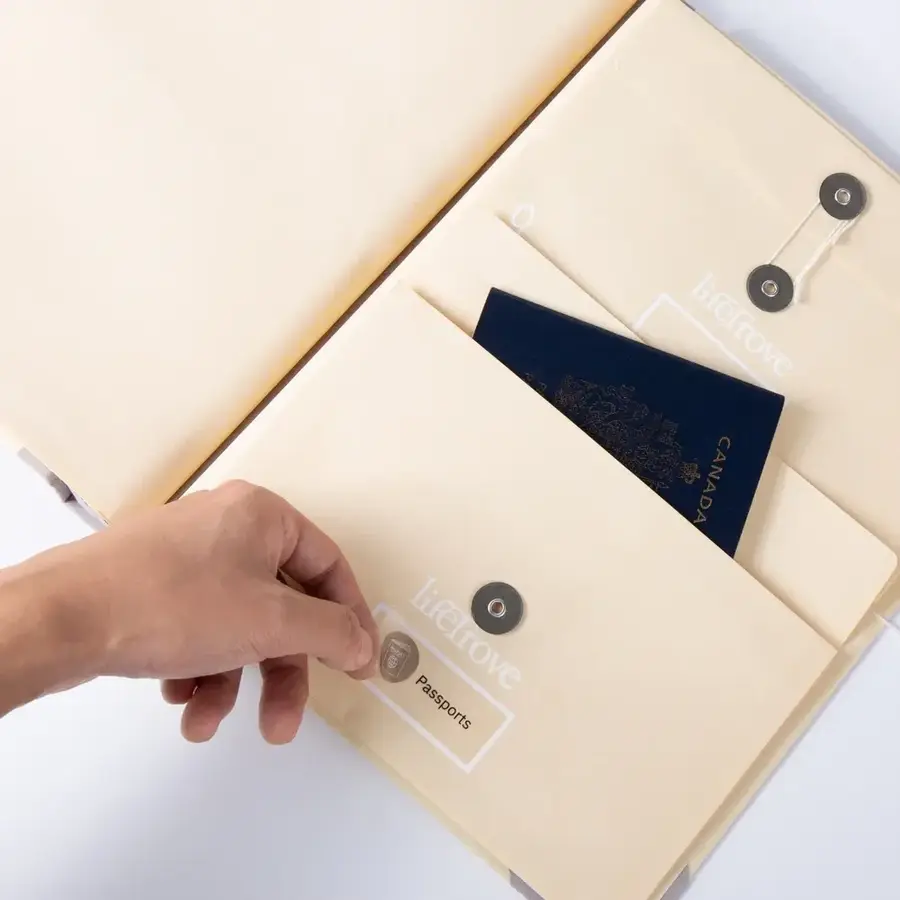
Every Section Your Family Will Need
- Health Insurance & Medicare — Current cards, policy numbers, coverage details. Exactly what the ER needs first.
- Medications & Medical Records — Complete medication list, dosages, allergies, doctor contacts. What doctors need before they treat you.
- Legal Documents — Will, healthcare directive, power of attorney. The documents that determine what happens to you and your estate.
- Banking & Investments — Account numbers, institution contacts, investment summaries. No more hunting for what exists.
- Property & Insurance — Home, auto, and life insurance policies. The documents that protect everything you've built.
- Passwords & Digital Accounts — Securely documented. No more locked-out accounts after a death.
- Emergency Contacts & End-of-Life Wishes — Clear, accessible, impossible to miss.